
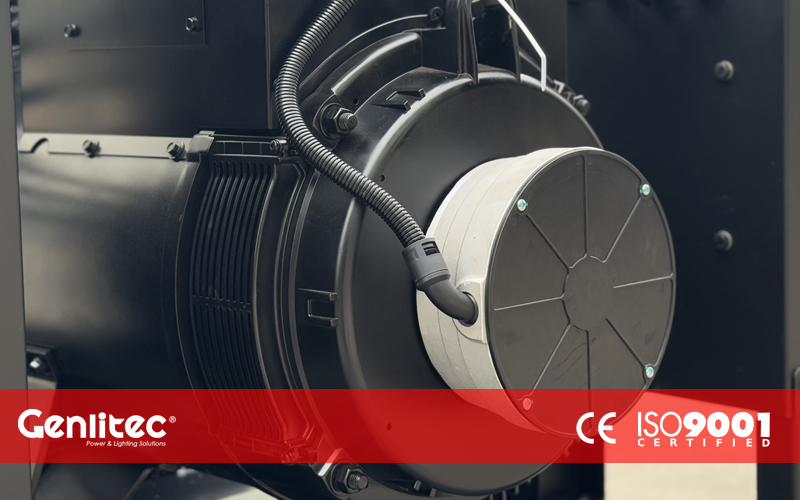
In diesel generator sets, PMG (Permanent Magnet Generator) and AREP (Auxiliary Winding Excitation System) are two excitation technologies used to provide power to the AVR (Automatic Voltage Regulator).
Both systems can improve voltage regulation and generator performance when the load changes significantly, particularly in applications involving motor starting, nonlinear loads, or other demanding electrical conditions.
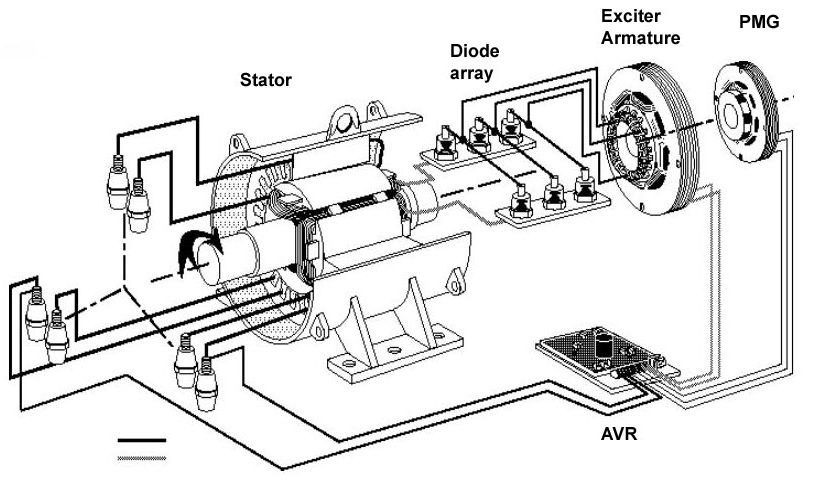
PMG (Permanent Magnet Generator)
The PMG system uses permanent magnets to generate an independent power supply for the AVR. Because the excitation source is separated from the generator's main output, the AVR can maintain a stable excitation supply even when the generator voltage is affected by load changes.
○ Stable AVR Power Supply
The PMG provides an independent excitation source, allowing the AVR to maintain stable voltage regulation during changes in generator load.
○ Fast Voltage Response
With an independent excitation supply, the AVR can respond quickly to sudden load changes and help restore generator voltage to the required level.
○ Suitable for Demanding Loads
PMG excitation is particularly useful for generator sets supplying motors, nonlinear loads, UPS systems, and other equipment that can cause significant voltage fluctuations.
AREP (Auxiliary Winding Excitation System)
The AREP system uses auxiliary windings in the alternator to provide excitation power to the AVR. The excitation supply changes according to generator operating conditions, providing additional support when the generator is subjected to demanding loads.
○ Improved Transient Performance
AREP provides additional excitation support during sudden load application, helping the alternator maintain voltage stability when large loads are connected.
○ Suitable for Heavy and Nonlinear Loads
AREP excitation can be advantageous for applications involving heavy motor loads, nonlinear loads, and frequent load fluctuations where good transient voltage performance is required.
○ Integrated Alternator Design
Unlike an external PMG, the AREP excitation windings are integrated into the alternator. Maintenance and repair procedures therefore depend on the alternator design and may require access to internal components.
PMG vs AREP: Key Difference
The main difference between PMG and AREP is the way excitation power is supplied to the AVR.
○ PMG uses a separate permanent-magnet generator to provide an independent excitation supply.
○ AREP uses auxiliary windings integrated into the alternator to supply excitation power to the AVR.
Both systems can improve voltage regulation, but the appropriate choice depends on the alternator design, generator application, load characteristics, and required transient performance.
Which Excitation System Is Right for a Diesel Generator?
For applications with large motor starting currents, nonlinear loads, UPS systems, or frequent load changes, an excitation system with strong transient voltage performance can be an important consideration.
When selecting a diesel generator set, the excitation system should therefore be considered together with the alternator, AVR, engine characteristics, load profile, and application requirements rather than evaluated separately.
Conclusion
PMG and AREP are two established excitation technologies used in diesel generator alternators. PMG provides an independent excitation power source for the AVR, while AREP uses auxiliary windings integrated into the alternator.
Understanding the differences between PMG and AREP helps users select an alternator and excitation system that match the generator's load characteristics and operating requirements.
Post time: Nov-14-2024