
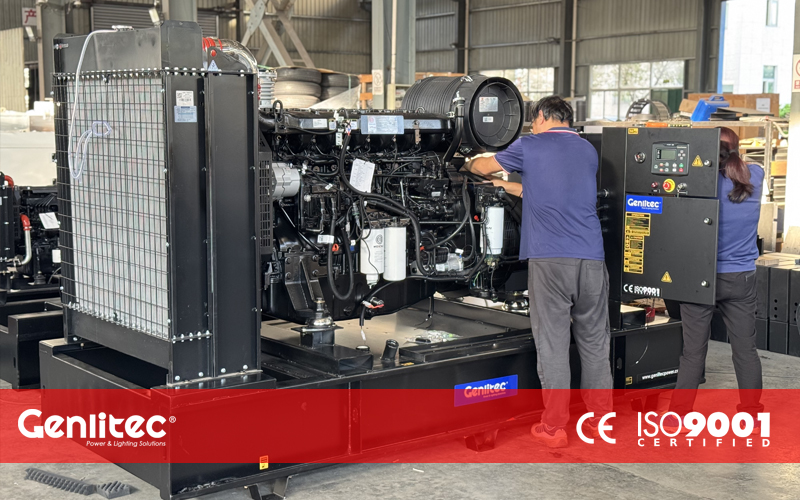
After receiving a new diesel generator set, proper inspection and commissioning are important before the unit is put into regular operation. The following checklist covers the key steps from delivery inspection to initial startup and load testing.
1. Inspect the Generator After Delivery
Check the generator set and its packaging for visible damage that may have occurred during transportation.
- Check the canopy, base frame, radiator, control panel, and other visible components.
- Verify that the accessories and spare parts listed in the packing list are included.
- Check for signs of fuel, oil, coolant, or other fluid leakage.
- Report any transportation damage or missing components before installation.
2. Check the Installation Site
- Ventilation: Ensure sufficient airflow for engine combustion and radiator cooling.
- Foundation: Install the generator on a firm and level foundation capable of supporting its weight.
- Exhaust: Ensure the exhaust system is correctly installed and safely routed away from occupied areas.
- Weather Protection: For outdoor installations, provide appropriate protection against rain, dust, and other environmental conditions.
- Maintenance Access: Leave sufficient space around the generator for inspection and servicing.
3. Check Engine Fluids and Fuel
- Engine Oil: Check the oil level and confirm that the correct oil grade has been used.
- Coolant: Check the coolant level and confirm that the cooling system is properly filled.
- Fuel: Use the specified diesel fuel and check the fuel lines and connections for leakage.
- Fuel System: If required, prime or bleed the fuel system before the first startup.
4. Check the Starting Battery
Check the battery condition, voltage, terminals, and cable connections. Make sure the terminals are clean and securely tightened. The battery should be adequately charged before startup.
5. Inspect the Electrical Connections
Before energizing the generator, check the main electrical connections and confirm that all wiring has been installed according to the generator and site electrical requirements.
- Check generator output cables and terminals.
- Check grounding connections.
- Check ATS or other external control connections where applicable.
- Make sure all connections are secure and correctly terminated.
6. Check the Control Panel
Inspect the controller and control panel before starting the generator. Check the display, indicators, emergency stop button, start and stop controls, and any configured protection functions. Confirm that there are no active alarms before startup.
7. Start and Check the Generator at No Load
Start the generator without load and allow the engine to reach its normal operating condition. During the initial run, monitor the main operating parameters.
- Engine speed and frequency
- Generator output voltage
- Engine oil pressure
- Coolant temperature
- Abnormal noise, vibration, smoke, or leakage
8. Perform a Load Test
After confirming stable no-load operation, gradually apply load and monitor the generator under operating conditions. Where possible, the load should be increased progressively rather than applying the full load immediately.
- Check voltage and frequency stability.
- Check current and power output.
- Monitor engine oil pressure and coolant temperature.
- Check for abnormal noise, vibration, smoke, or leakage.
- Verify that the generator operates normally at the required load.
9. Record Commissioning Data
Record the main operating parameters during commissioning. Keeping these initial records provides a useful reference for future maintenance and troubleshooting.
- Voltage and frequency
- Current and power output
- Engine oil pressure
- Coolant temperature
- Alarm or fault information, if any
10. Keep the Manuals and Maintenance Records
Keep the engine manual, generator set manual, controller documentation, wiring diagrams, warranty documents, and commissioning records in an accessible location. Follow the manufacturer's recommended maintenance intervals for oil, filters, coolant, batteries, and other service items.
Important Note
Installation, commissioning, and electrical connection work should be carried out by qualified personnel in accordance with the generator manufacturer's instructions and applicable local requirements. If any abnormal condition or alarm occurs during startup or load testing, stop the generator and identify the cause before continuing operation.
Post time: Feb-25-2025